2026-10-17 ·
What Tujunga Residents Should Know About Mold in Post-1950s Houses
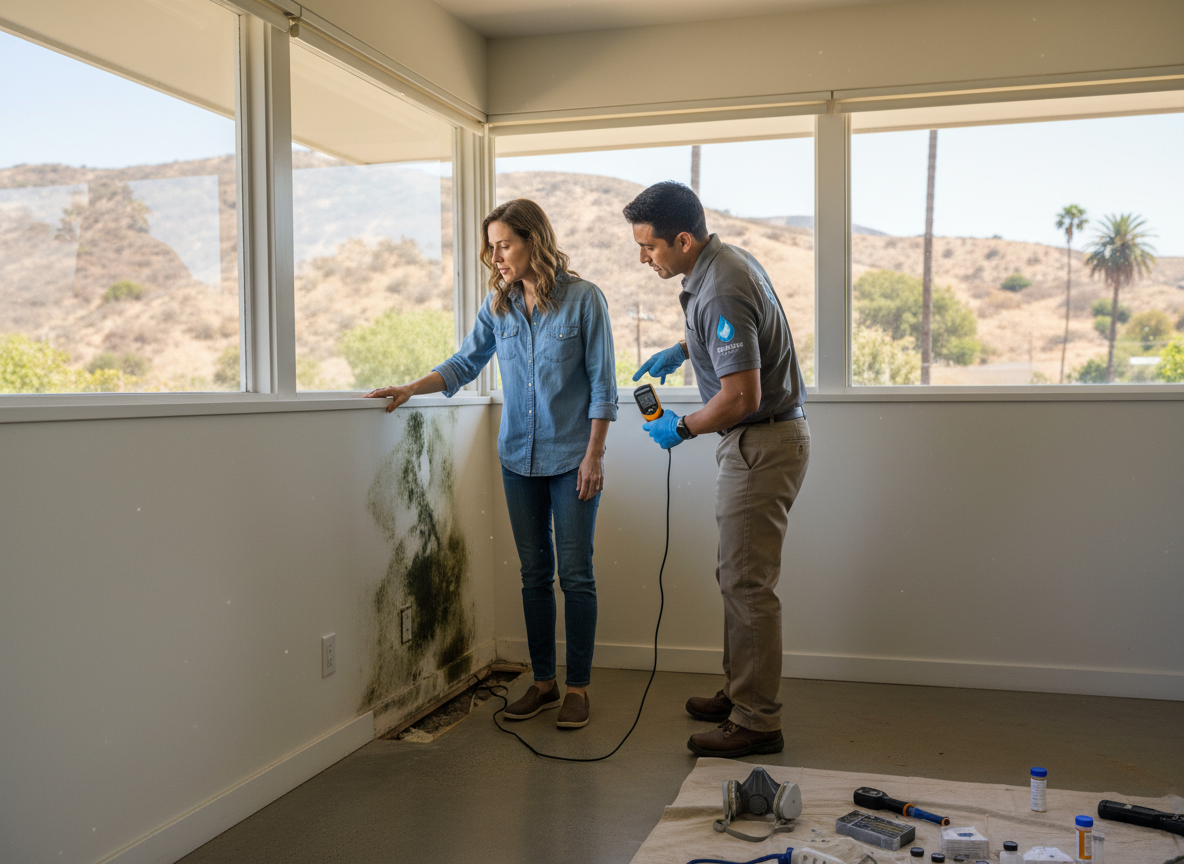
Post-1950s houses in Tujunga often develop mold in attics, crawl spaces, and wall cavities due to slab-on-grade foundations, single-pane windows, and limited attic ventilation common in that era's tract construction across Tujunga Village and Foothill Trails.
Construction Features That Encourage Mold Growth
Post-1950s homes in Los Angeles County neighborhoods like Tujunga Village typically feature stucco exteriors over wood framing with minimal insulation and roof designs that channel rainwater toward eaves. These details allow small leaks from aging composition shingles to saturate ceiling joists before residents notice. The mild winters keep interior humidity elevated long enough for spores to colonize drywall paper, while hot dry summers mask the problem until an air conditioner cycles on and spreads musty odors. Bolton Hall Museum area homes built between 1955 and 1970 frequently show mold along original galvanized plumbing runs that have begun to corrode at joints. Residents in Sunland and Shadow Hills report similar patterns where original forced-air ducts rest directly on soil in crawl spaces, transferring ground moisture into living areas during the occasional winter rain events that reach the foothills.
How Tujunga's Climate and Terrain Affect Mold
Tujunga's Mediterranean climate brings hot dry summers that drive residents to close windows, trapping moisture from cooking and showers inside post-1950s ranch homes. When temperatures drop in mild winters, condensation forms on cooler north-facing walls near the Angeles National Forest boundary. The Tujunga Wash contributes seasonal humidity spikes that penetrate older single-story homes in Foothill Trails, especially those with original aluminum windows that lack thermal breaks. Terrain slopes in Sylmar-adjacent pockets direct runoff toward foundations during rare heavy rains, saturating perimeter soils and pushing moisture through stucco cracks common in 1960s builds. These cycles differ from newer homes because post-1950s structures lack modern vapor barriers and continuous ventilation systems that later codes required.
Practical Steps for Checking Post-1950s Properties
Start by examining attic insulation for dark staining along roof sheathing, a frequent first sign in Tujunga homes built before 1975. Check bathroom exhaust fans to confirm they vent fully outside rather than into attics, a shortcut installers used in that period. Walk the exterior during daylight and note any stucco cracks wider than 1/16 inch near window corners, which allow wind-driven moisture from the foothills to enter wall cavities. Use a moisture meter on baseboards in rooms closest to the Tujunga Wash; readings above 15 percent warrant further investigation. For homes in Sunland, inspect under sinks for original copper supply lines that sweat during humid periods and drip onto particleboard vanity cabinets.
When to Arrange Professional Evaluation
If visible discoloration appears on ceilings or musty smells persist after opening windows, schedule a mold inspection that includes air sampling and wall cavity checks suited to post-1950s framing. Properties near the Angeles National Forest edge may need extra attention to roof decking where pine needle accumulation holds moisture against shingles. Review the step-by-step guide to checking for mold after a Tujunga leak before calling, then compare findings against the local cost factors for mold remediation in Tujunga article. Homes in Sylmar-adjacent sections of Tujunga sometimes require targeted work on original ductwork that crosses crawl spaces, where soil moisture migrates upward during winter.
Ongoing Maintenance for These Homes
Replace original roof vents with larger units rated for 1 square foot of net free area per 150 square feet of attic floor to counter the limited original ventilation in 1950s-1960s builds. Clean gutters twice yearly to prevent overflow onto stucco walls, a common entry point for water in Foothill Trails homes. Install a dehumidifier set to 50 percent in any finished basement or lower-level room during the cooler months when outdoor humidity lingers. Trim vegetation within 18 inches of exterior walls to improve airflow around the foundation, reducing the ground moisture that affects post-1950s slabs. Residents near Bolton Hall Museum often add ridge vents during re-roofing projects to address the heat buildup that drives condensation in unvented attics.