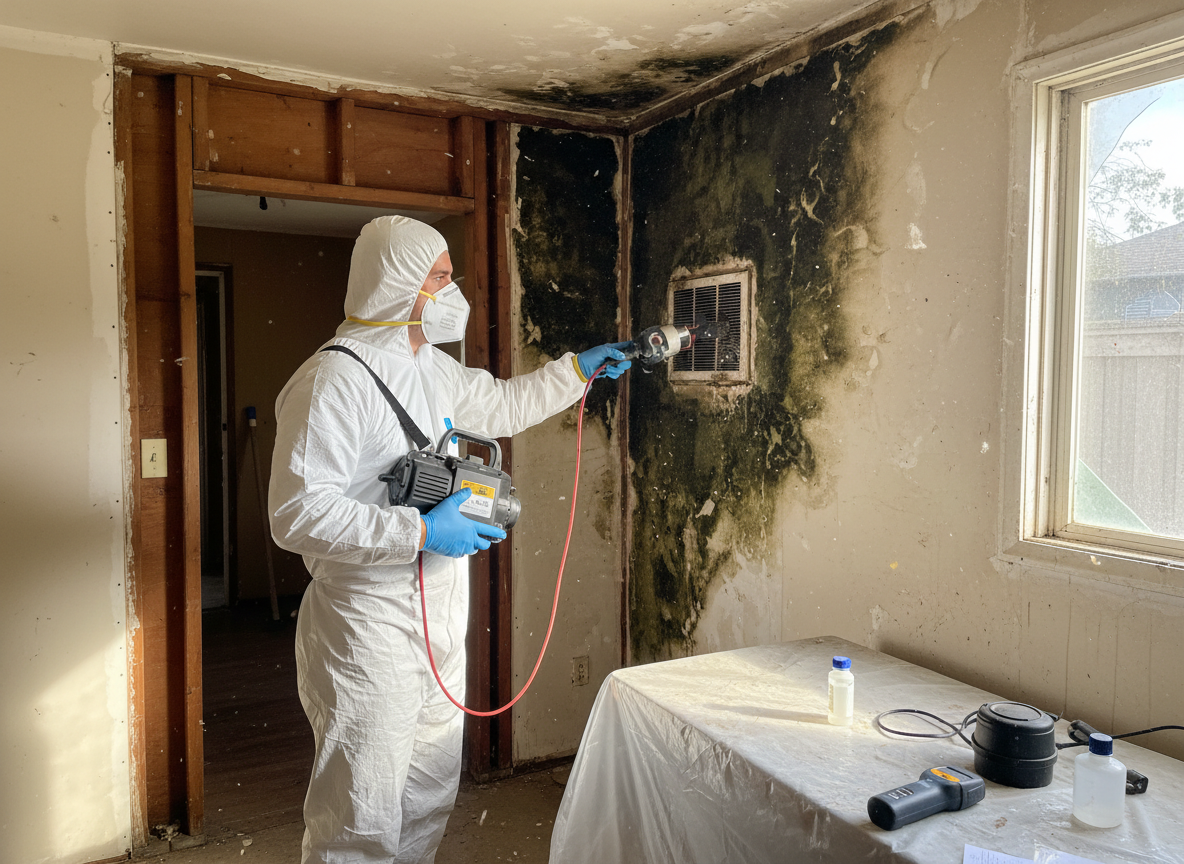
Tujunga sits in a Mediterranean climate with hot dry summers that mask ongoing moisture issues from roof leaks or poor drainage near the Angeles National Forest and Tujunga Wash. Older housing stock in Foothill Trails and Tujunga Village often features crawl spaces and attics that trap humidity during mild winters, allowing mold to develop behind walls or under floors without visible signs. Testing begins with calibrated moisture meters and thermal imaging to locate these pockets before any sampling occurs.
Air sampling and surface swab protocols follow Los Angeles County guidelines to capture both viable and non-viable spores. In neighborhoods like Sunland and Shadow Hills, proximity to the wash increases risk of seasonal water intrusion that standard visual checks miss. Samples are sent to accredited labs for genus-level identification, giving homeowners clear data on species such as Stachybotrys or Aspergillus that commonly appear after undetected plumbing failures in Sylmar-adjacent properties.
Edge cases include false negatives from recent cleaning attempts or from testing only during peak summer dryness when spore counts drop. A full report includes chain-of-custody documentation, moisture mapping, and recommendations for targeted follow-up rather than whole-home assumptions. This approach prevents unnecessary demolition while addressing the actual conditions found in Tujunga’s varied terrain and housing ages.
Technician insight
In Tujunga the thing that catches most people out with Mold Testing is how the Tujunga Wash and surrounding foothills push moisture into older crawl spaces in Foothill Trails during our mild winters, even when the house feels dry upstairs. Homeowners often test only visible rooms and miss the hidden growth behind insulation.
Crawl Space Mold Found After Dry Summer
A homeowner in Tujunga Village noticed musty odors after a minor roof leak the previous winter. Testing revealed elevated spore counts in the crawl space fed by runoff from the nearby wash. Air and surface samples confirmed Aspergillus growth behind insulation. Targeted remediation was limited to the affected section rather than the entire home.
How it works
- 1
Initial Assessment
Review property history and visible concerns with the homeowner at the Tujunga address.
- 2
On-Site Inspection
Use moisture meters, thermal cameras, and borescopes in attics, crawl spaces, and wall cavities.
- 3
Sample Collection
Collect air, surface, and bulk samples from identified problem zones for lab analysis.
- 4
Laboratory Results and Report
Interpret findings and deliver a written report with moisture maps and next-step guidance.
Pricing
Upfront quotes after the initial assessment reflect property size, number of samples, and access challenges typical in Tujunga homes.