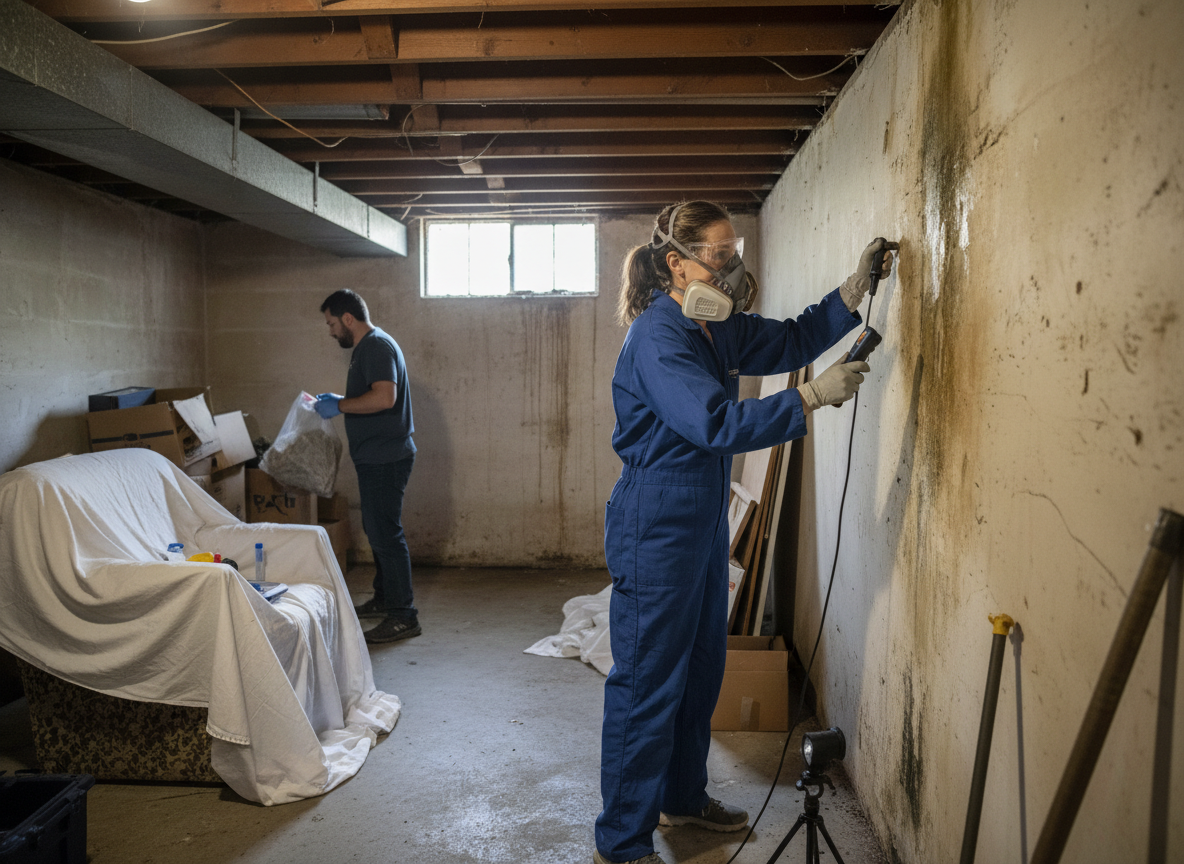
Tujunga homes built before 1970 often feature crawl spaces and attics with limited ventilation that trap moisture during the mild winters. A proper inspection starts with moisture mapping using pin and pinless meters around the foundation, especially near the Tujunga Wash where seasonal runoff raises soil humidity. Inspectors check behind lath-and-plaster walls in Foothill Trails bungalows, where paper-backed insulation can hide growth that only appears after the first heavy rain.
Los Angeles County building codes require ventilation in enclosed spaces, yet many Sunland and Shadow Hills properties still have original single-pane windows and unlined ducts that pull humid air from the Angeles National Forest slopes. During an inspection we remove outlet covers and inspect HVAC returns because dry summer dust often masks active colonies until the first winter storm. Edge cases include stucco-clad homes where water enters at roofline transitions and travels down wall cavities undetected for years.
Homeowners in Tujunga Village frequently mistake musty odors from Bolton Hall Museum-era construction for simple age. We test air samples in multiple zones and compare them to outdoor baselines because the area's hot, dry summers concentrate spores indoors once windows close. Visual inspection alone misses growth inside wall cavities near plumbing chases, so we use borescopes in every accessible void before issuing a written report with photos and moisture readings.
Technician insight
In Tujunga, the thing that catches most people out with Home mold inspection is the crawl spaces under 1950s homes in Foothill Trails where the Tujunga Wash keeps soil damp long after the mild winter rains stop, so growth stays hidden until you pull the insulation.
Hidden Growth Behind Kitchen Cabinets
A Sunland homeowner noticed a persistent musty smell after winter rains. Inspection revealed elevated moisture along the slab edge where the Tujunga Wash drainage affects the lot. We mapped the affected area behind the cabinets, confirmed growth with surface samples, and documented the path of water entry for targeted remediation.
How it works
- 1
Initial Walkthrough
We review the home's history with the owner, noting any past leaks near the Tujunga Wash or recent roof work.
- 2
Moisture and Humidity Mapping
Pin and pinless meters check foundations, attics, and crawl spaces in Tujunga Village and Foothill Trails homes.
- 3
Visual and Tool-Assisted Inspection
Borescope and thermal imaging locate hidden growth behind plaster and in HVAC returns common to older Los Angeles County properties.
- 4
Sampling and Documentation
Air and surface samples are taken where needed, with photos and readings compiled into a clear report.
- 5
Findings Review
We explain results on site and outline next steps if remediation is required.
Pricing
Pricing depends on square footage, number of stories, and whether sampling is required.