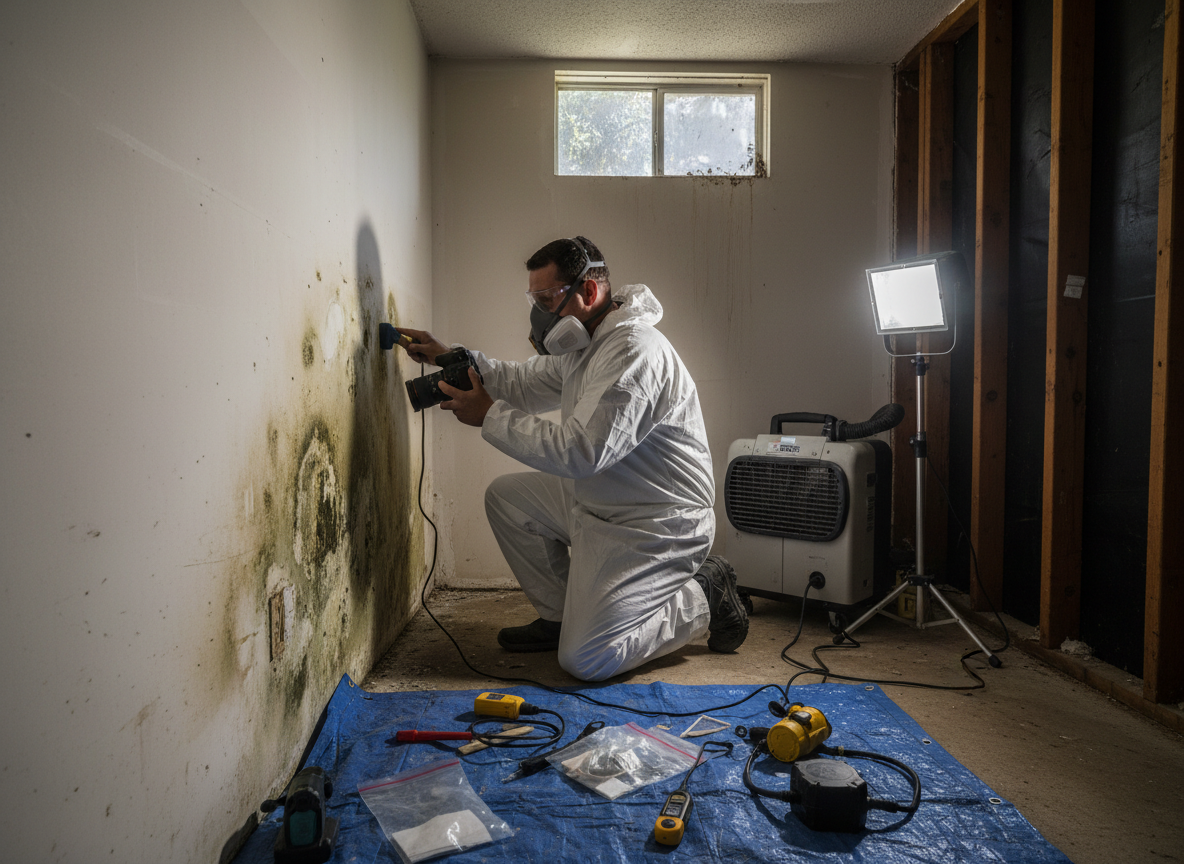
Tujunga sits in Los Angeles County with a Mediterranean climate of hot dry summers and mild winters that bring enough rain to create hidden moisture problems in crawlspaces and attics. Homes in Tujunga Village and Foothill Trails often date back decades and feature older wood framing and limited ventilation that lets condensation build after winter storms rolling off the Angeles National Forest. A proper inspection must account for how water moves along the terrain toward the Tujunga Wash and pools under slabs or behind stucco.
Inspectors check every accessible area including under sinks, around windows, and inside HVAC returns because mold frequently starts in spots homeowners cannot see. In Sunland and Shadow Hills properties the combination of dry summer winds and occasional winter leaks from aging roofs creates edge cases where surface sampling alone misses growth inside wall cavities. We document visible staining, musty odors, and moisture meter readings without assuming any single test tells the full story.
Los Angeles County building practices in these neighborhoods mean many homes lack modern vapor barriers, so inspectors pay special attention to slab edges and foundation vents where soil moisture from the surrounding hills can migrate indoors. The work requires moving furniture, lifting carpet corners, and using ladders to reach high areas because quick walkthroughs routinely miss the conditions that later require full remediation.
Technician insight
In Tujunga the thing that catches most people out with Mold Inspection is how winter rain funnels down the slopes from Angeles National Forest and sits against older foundations in Foothill Trails homes long after the skies clear, especially when the Tujunga Wash backs up nearby.
Foothill Trails Crawlspace Find
A homeowner in Foothill Trails noticed a musty smell after several winter storms. Inspection revealed elevated moisture along the uphill foundation wall where runoff from the Angeles National Forest slope had entered the crawlspace. We documented the affected joists and recommended targeted drying before any remediation began. The owner addressed the drainage issue and the odor did not return.
How it works
- 1
Initial Walkthrough
We arrive at the property and speak with the owner about any odors, leaks, or recent weather events that might have introduced moisture near Tujunga Wash or the foothills.
- 2
Visual and Moisture Assessment
Every room, attic, and crawlspace is examined with moisture meters and infrared tools to locate hidden dampness common in older Tujunga Village homes.
- 3
Sampling Where Needed
Air or surface samples are collected from suspect areas and sent to a lab when visual evidence or readings indicate active growth.
- 4
Report and Recommendations
Findings are compiled into a clear written report with photos and next-step options tailored to the specific construction and location in Los Angeles County.
Pricing
Pricing depends on square footage, number of stories, and whether sampling is required; upfront quotes are given before work begins.