Tujunga sits in the foothills of the Angeles National Forest with a Mediterranean climate that brings hot dry summers and occasional heavy winter rains. These rains often send water along the Tujunga Wash and into older single-story homes built from the 1940s through the 1970s in Tujunga Village and Foothill Trails. Many of these houses have crawlspaces or slab-on-grade construction where moisture lingers behind stucco or under hardwood floors. Affordable mold remediation here starts with mapping every moisture source rather than simply spraying visible spots.
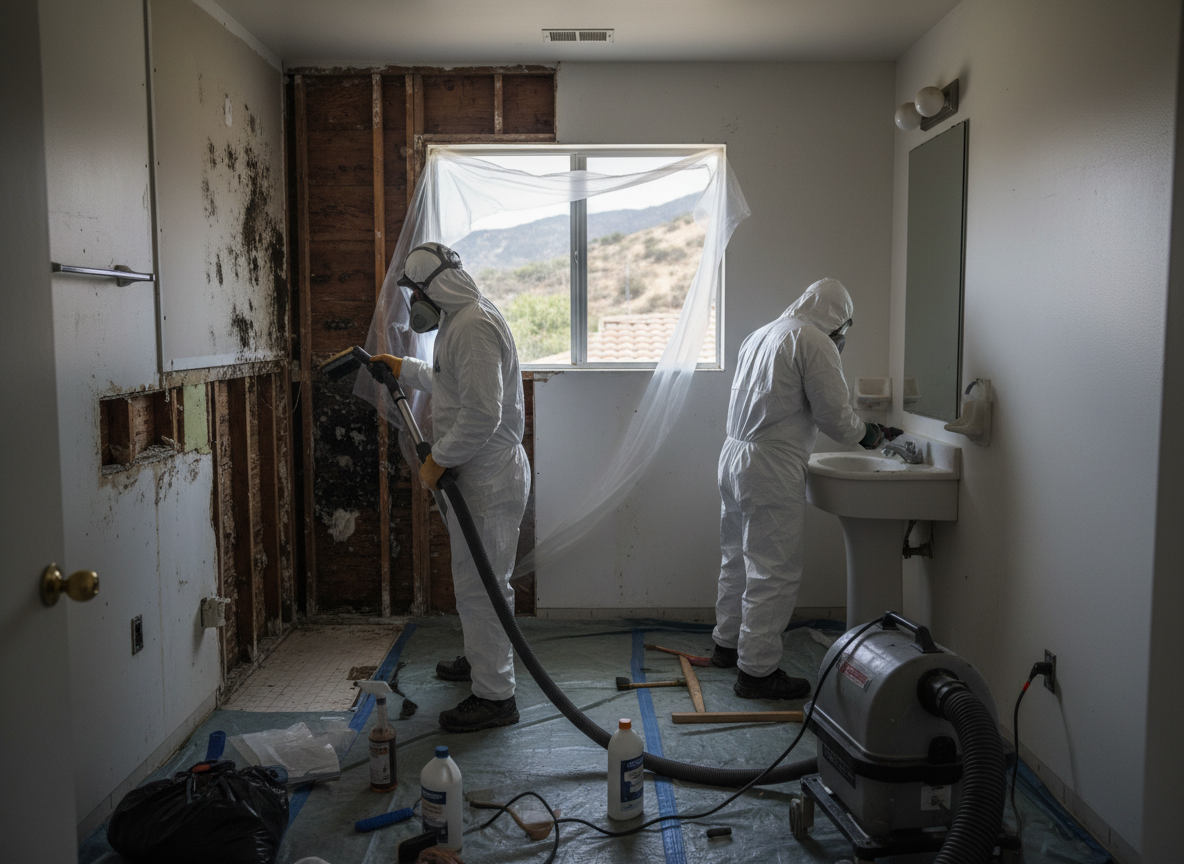
Homeowners in nearby Sunland, Sylmar and Shadow Hills frequently call after noticing musty odors following the first winter storms. The terrain funnels runoff toward foundations, and many properties sit on slopes where soil stays damp longer than flat areas. We use moisture meters and thermal imaging to find hidden growth inside wall cavities without unnecessary demolition. Containment barriers and negative air machines keep spores from spreading into living spaces during removal.
Los Angeles County building codes require proper disposal of contaminated materials and documentation of moisture correction. We separate affected drywall, insulation and baseboards, bag them on site, and remove them through exterior exits to avoid cross-contamination. After removal we apply EPA-registered antimicrobials only where needed and document the work for insurance or real-estate transactions.
Dry summers can hide ongoing leaks until the next rain season, so we always check plumbing penetrations, roof valleys and window flashing around Bolton Hall Museum area homes. Skipping these steps leads to repeat growth within months.
Technician insight
In Tujunga the thing that catches most people out with affordable mold remediation is the older stucco homes in Foothill Trails where the dry Mediterranean summers mask leaks along the foundation until winter rain pushes water from the Tujunga Wash into the crawlspace. Homeowners often treat only the visible spot and miss the hidden moisture behind the slab edge.
Hidden Growth After Winter Rains
A Sunland homeowner noticed a musty smell in the hallway after heavy rains. Inspection found elevated moisture in the subfloor near a slope where runoff collected. We contained the hallway, removed the affected hardwood and underlayment, dried the joists and confirmed clearance. The odor disappeared and no regrowth occurred the following season.
How it works
- 1
Initial Inspection
We arrive 24/7 at 6350 Foothill Blvd base and assess visible growth, moisture readings and airflow patterns in Tujunga homes.
- 2
Containment Setup
Plastic barriers and negative air machines isolate the work zone so spores do not travel to unaffected rooms.
- 3
Removal and Cleaning
Affected materials are cut out, bagged and removed; surfaces are cleaned with appropriate antimicrobials.
- 4
Drying and Verification
Dehumidifiers and air movers dry the space, followed by post-remediation moisture checks and clearance testing.
- 5
Prevention Recommendations
We note drainage fixes near the Tujunga Wash or ventilation upgrades that address the local climate and terrain.
Pricing
Upfront quotes after inspection; price depends on square footage, depth of growth and access in crawlspaces or attics common in Tujunga.