Tujunga sits in the foothills of the Angeles National Forest where many homes in Foothill Trails and Tujunga Village were built before 1960 with vented attics and minimal insulation. Hot dry summers followed by occasional winter rains can drive moisture through roof penetrations and into cellulose insulation or rafters. Homeowners in these neighborhoods often discover black or brown discoloration on roof sheathing during routine inspections before any musty odor reaches the living space.
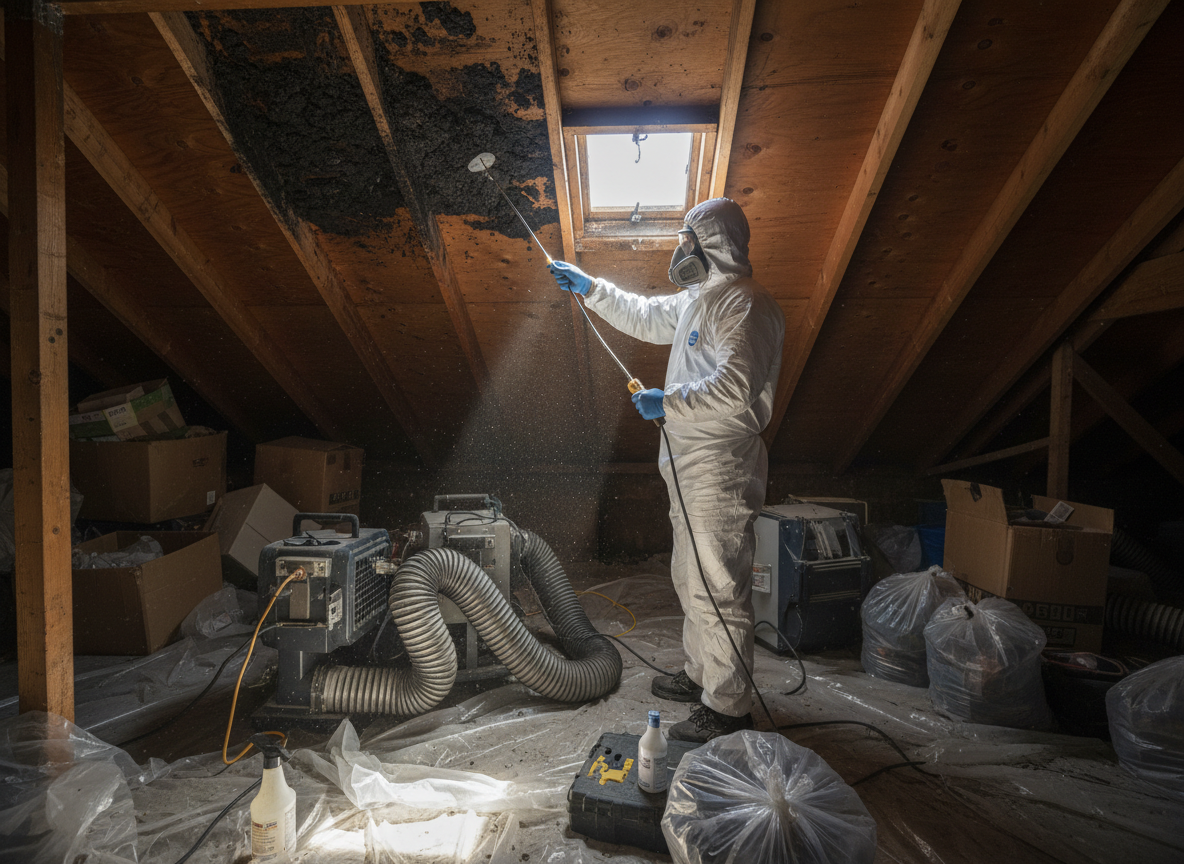
Testing begins with moisture mapping and air sampling from the attic access point while checking for hidden growth behind insulation batts or along the Tujunga Wash side of the property where humidity lingers longer. Removal requires containment barriers sealed to the ceiling joists, negative air machines exhausting through a window, and careful disposal of affected materials without disturbing settled spores that could drop into living areas below. Los Angeles County building codes require proper disposal documentation when more than ten square feet of mold is disturbed.
After physical removal we apply EPA-registered antimicrobials to wood surfaces and may recommend adding ridge or gable vents to improve airflow in homes near Bolton Hall Museum where tree cover reduces natural drying. Edge cases include mold on HVAC ducts that run through the attic or growth triggered by bathroom exhaust fans venting directly into the attic space rather than outside. These situations demand separate containment zones and follow-up clearance testing before insulation can be replaced.
Seasonal Guidance
Dry summers reduce visible surface moisture yet trapped humidity from prior rains can still support growth behind insulation. Winter storms bring the highest call volume when roof leaks from wind-driven rain become apparent. Homeowners in Sunland and Shadow Hills should inspect attics after any storm exceeding half an inch of rain.
Technician insight
In Tujunga the thing that catches most people out with Attic mold testing and removal is older homes in Foothill Trails where the original roof vents were never upgraded when insulation was added, so even mild winter rains create pockets of trapped moisture along the north-facing slopes that stay hidden until the dry season.
Hidden growth after winter rain in Tujunga Village
A homeowner noticed dark streaks on ceiling drywall after a January storm. Inspection revealed roof flashing failure above the attic allowing water to pool on cellulose insulation near the Tujunga Wash side of the property. We contained the space, removed the wet insulation, treated the rafters, and added extra ridge venting to match the home's original construction style. Clearance testing passed and no recurrence has been reported through the following summer.
How it works
- 1
Initial Assessment
Technician arrives within hours, inspects attic from access point, checks for moisture sources tied to roof age and terrain slope.
- 2
Testing and Containment
Air and surface samples collected, plastic barriers erected, negative air established to prevent spores from entering living areas.
- 3
Removal and Treatment
Affected insulation and sheathing removed, wood treated, debris sealed in heavy bags for proper Los Angeles County disposal.
- 4
Clearance and Prevention
Post-remediation testing confirms levels below threshold, recommendations given for improved ventilation suited to local climate.
Pricing
Cost depends on attic square footage, depth of insulation, and whether HVAC components are involved; most Tujunga jobs require an on-site assessment before quoting.