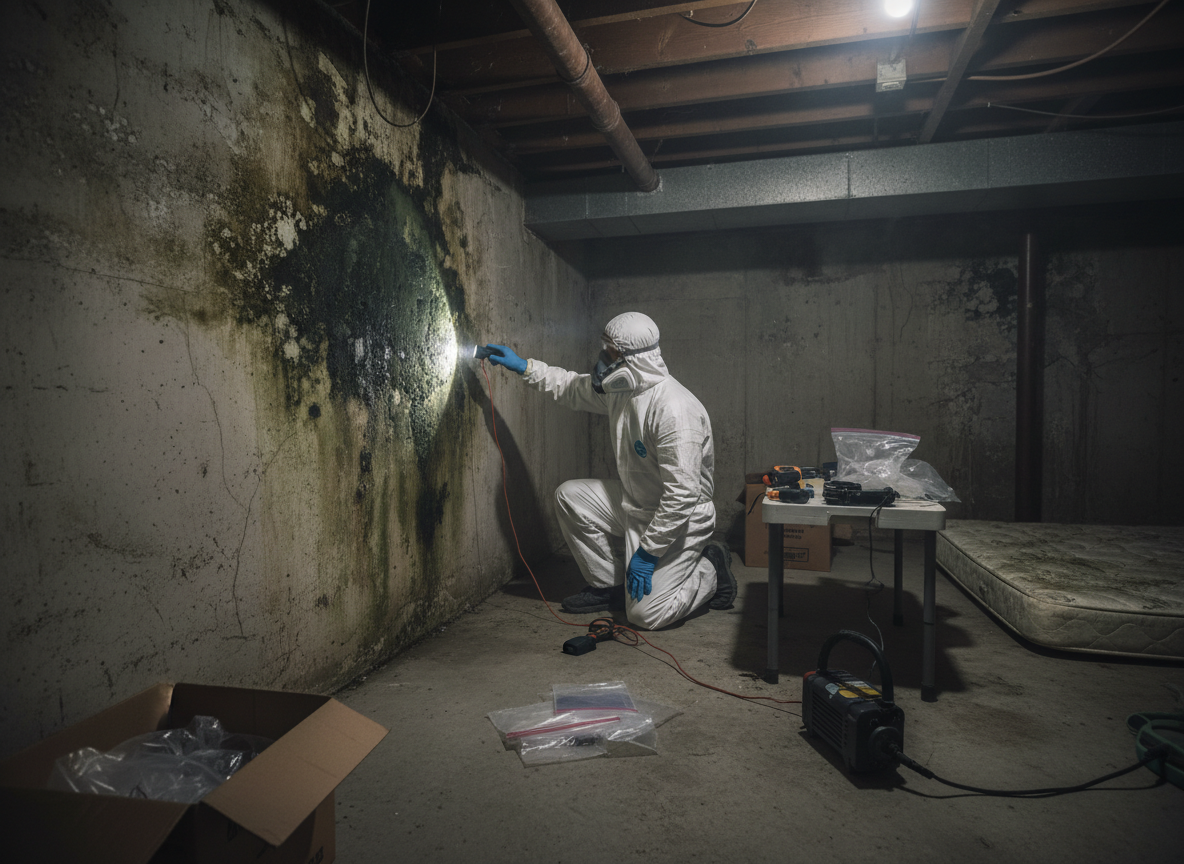
Tujunga sits in Los Angeles County with a Mediterranean climate of hot dry summers and mild winters that still bring enough rain to push water along the Tujunga Wash into older foundations. Many homes in Foothill Trails and Tujunga Village were built before modern waterproofing, so basements often sit partially below grade with concrete or block walls that wick moisture from the surrounding hills. A proper inspection starts with checking these materials for hidden growth behind insulation, under stairs, and along sill plates where airflow from the nearby Angeles National Forest keeps humidity trapped. Inspectors also look for past water lines from seasonal runoff that residents in Sunland and Shadow Hills see after winter storms.
Edge cases appear often because Sylmar and Sunland properties share the same alluvial soils that shift and crack during dry summers, allowing small leaks that feed mold colonies out of sight. Code notes in Los Angeles County require proper ventilation in below-grade spaces, yet many Bolton Hall Museum-era homes never received updates, leaving inspectors to flag missing vapor barriers or blocked weeps. Homeowners sometimes mistake musty smells for normal earth odors until drywall softens or baseboards pull away. Testing focuses on air samples from multiple basement zones plus surface swabs on wood joists that can hold spores for years after a single heavy rain event.
Warnings include never disturbing suspected areas before inspection because disturbing colonies can spread spores through the HVAC that many Tujunga homes share with upper floors. Terrain plays a direct role: steep driveways in Foothill Trails direct roof runoff toward foundation walls, creating consistent damp zones that inspectors map first. The work requires lifting carpet edges, moving stored items, and using moisture meters on every wall that touches soil, because surface checks alone miss growth inside cavities common in pre-1970 construction.
Technician insight
In Tujunga, the thing that catches most people out with Basement mold inspection is how the Tujunga Wash and winter rains push water against older block foundations in Foothill Trails homes that sit on shifting alluvial soil, creating hidden growth along sill plates that only shows up after you pull back insulation.
Hidden Growth Behind Insulation After Winter Runoff
A homeowner in Tujunga Village noticed a musty smell after heavy rains near the wash. Inspection revealed elevated moisture in a block wall that had wicked water from the footing. Samples confirmed mold inside the cavity behind fiberglass batts. We documented the source, advised on drainage fixes, and scheduled targeted removal without disturbing the rest of the basement.
How it works
- 1
Site Walk and Moisture Mapping
Technician arrives at the Tujunga address and walks the basement while noting water stains, musty zones, and any signs of past Tujunga Wash flooding.
- 2
Material and Cavity Inspection
Walls, floors, and joists are checked with meters and borescopes, paying special attention to older block foundations common in Foothill Trails homes.
- 3
Air and Surface Sampling
Samples are collected from multiple basement levels and sent for lab analysis to identify mold types tied to local soil and climate conditions.
- 4
Report and Recommendation
Findings are compiled into a written report that outlines affected areas, moisture sources, and next steps for remediation if growth is confirmed.
Pricing
Pricing for basement mold inspection varies with home age, basement size, and number of samples needed; most Tujunga jobs fall in a mid-range bracket because of the extra time required to access older foundations near the wash.