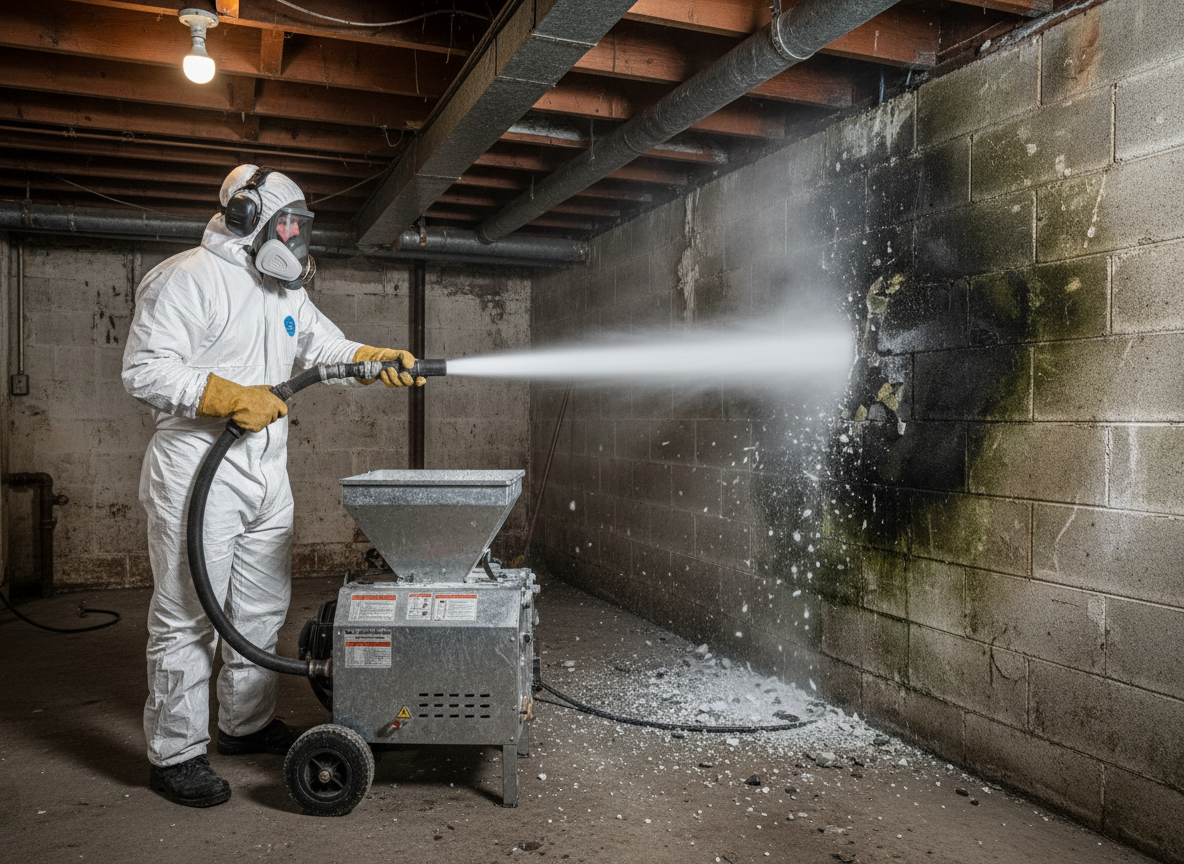
Tujunga homes built before 1970 in Tujunga Village and Foothill Trails often feature exposed rafters and unsealed crawl spaces that trap humidity after winter rains despite the Mediterranean climate. Dry ice blasting reaches these tight cavities without introducing water that could restart growth during the hot dry summers. Technicians adjust pellet velocity on site because older plaster and lath walls chip easily compared to newer drywall found closer to Sunland.
Near Tujunga Wash and the Angeles National Forest boundary, seasonal winds carry spores into attics through vents that many Shadow Hills and Sylmar properties share. The process avoids chemical residues that could affect nearby Bolton Hall Museum structures or sensitive landscaping. Crews monitor substrate temperature because rapid cooling can crack aged concrete foundations common along Foothill Blvd.
Edge cases include electrical boxes and HVAC plenums where residual moisture from any other method risks short circuits. Dry ice leaves no secondary waste, which matters on narrow lots typical in these neighborhoods where debris removal adds time. Operators wear supplied-air respirators because pellet fragmentation can aerosolize spores in confined Los Angeles County attics.
After blasting, surfaces are HEPA-vacuumed and treated with a non-porous sealer only where wood shows active staining. This sequence prevents re-growth when mild winter temperatures return and condensation forms on cooler north-facing walls.
Technician insight
In Tujunga the thing that catches most people out with dry ice blasting mold is how the dry summers mask ongoing moisture from the wash until winter condensation hits north walls in pre-1960 homes along Foothill Trails. Homeowners often seal visible spots without addressing the hidden rafter growth that wind carries in from the forest edge.
Attic Growth After Winter Rains
A Foothill Trails homeowner noticed musty odors after January storms. Inspection found mold on rafters fed by condensation from the nearby wash. Dry ice blasting cleared the colonies without wetting insulation. Follow-up sampling showed levels below outdoor baselines within 48 hours.
How it works
- 1
Site Assessment
Technician inspects attics, crawl spaces and wall cavities in Tujunga homes for moisture sources tied to the wash or seasonal rain.
- 2
Containment Setup
Plastic barriers and negative air machines isolate the work zone to keep spores from drifting into living areas of Foothill Trails properties.
- 3
Dry Ice Blasting
CO2 pellets are propelled at controlled pressure to lift mold from wood joists and concrete without water or chemicals.
- 4
Final Clearance
HEPA vacuuming followed by air sampling confirms removal before barriers come down on Sunland and Sylmar jobs.
Pricing
Cost depends on square footage, attic access difficulty and whether hidden cavities in older Tujunga homes require extra disassembly.