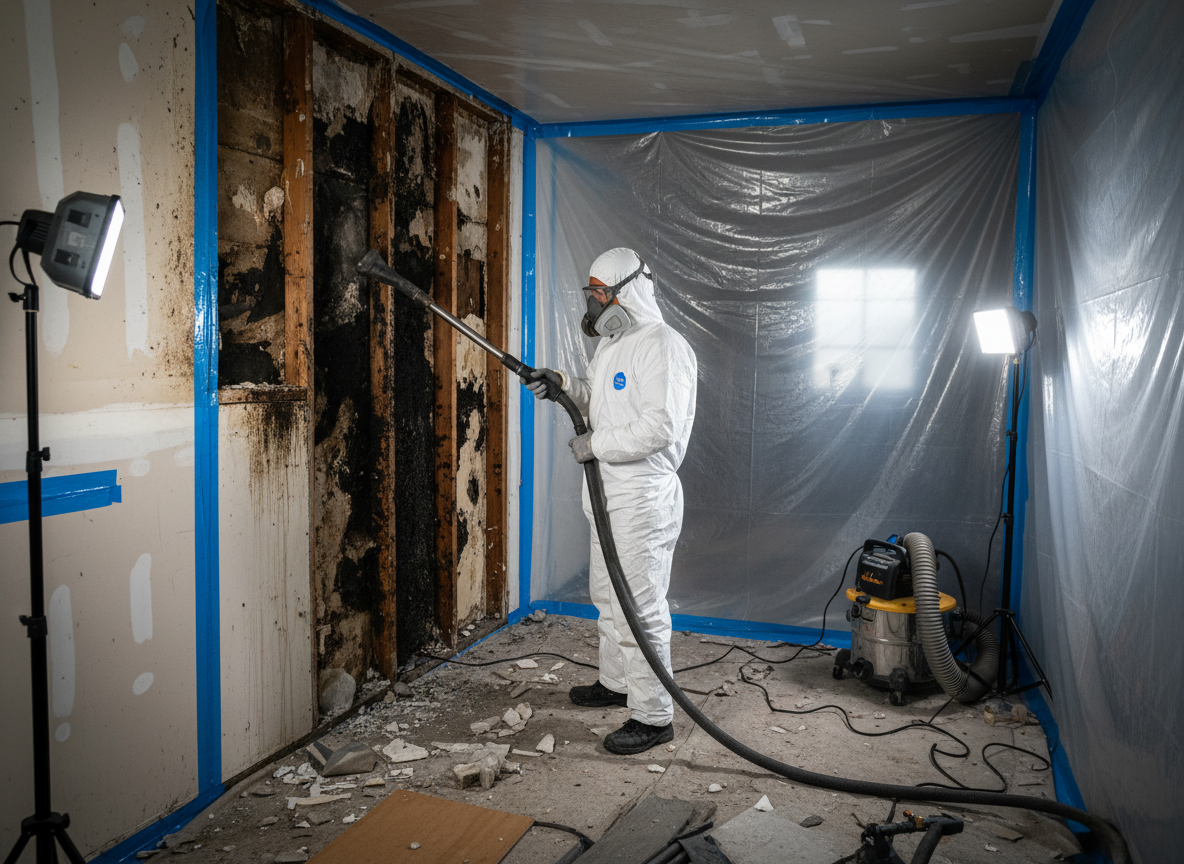
Tujunga homes built before 1970 in neighborhoods like Tujunga Village and Foothill Trails often feature crawl spaces and attics that trap moisture from winter rains and runoff from the Angeles National Forest slopes. Mediterranean climate patterns bring concentrated winter precipitation followed by long dry summers, so hidden leaks around roof penetrations or foundation cracks near Tujunga Wash frequently go unnoticed until musty odors appear. Abatement crews start with moisture mapping and air sampling to locate growth behind plaster or under subfloors without unnecessary demolition.
Removal protocols follow Los Angeles County guidelines for containing spores during demolition of affected drywall or insulation. Technicians use negative air machines and HEPA filtration to prevent cross-contamination into living spaces, especially important in compact lots common along Foothill Boulevard. After physical removal, antimicrobial treatments are applied only to non-porous surfaces while porous materials like carpet padding or ceiling tiles are discarded. Final clearance testing confirms spore counts return to outdoor baselines before reconstruction begins.
Post-abatement drying relies on commercial dehumidifiers sized for the home's square footage and the local humidity swings between the San Gabriel Mountains and valley floor. Crews also address contributing factors such as poor grading near Bolton Hall Museum properties or clogged gutters that direct water toward foundations in Sunland and Sylmar border homes. Homeowners receive a written scope that lists every removed item and the locations of any remaining sealed surfaces for future reference during real estate transactions.
Technician insight
In Tujunga the thing that catches most people out with mold abatement is water that travels under 1950s slab foundations from Tujunga Wash during heavy winter storms. Homeowners often treat only the visible wall stain while the real source sits in the sub-slab soil, so the growth returns within a season unless the grading and drainage are corrected at the same time.
Hidden Growth Behind Kitchen Cabinets
A Foothill Trails homeowner noticed a musty smell after January rains but saw no stains. Inspection revealed water had wicked up from the crawl space into the toe-kick area. Crews removed the lower cabinets and base plates, dried the joists, and sealed the soil vapor barrier. The odor disappeared and follow-up testing showed normal spore levels.
How it works
- 1
Initial Assessment
Technician inspects crawl spaces, attics, and walls in Tujunga homes for visible growth and moisture sources tied to seasonal rains or Tujunga Wash proximity.
- 2
Containment Setup
Plastic barriers and negative air machines isolate the work zone to keep spores from migrating into unaffected areas of Foothill Trails or Sunland properties.
- 3
Material Removal
Affected drywall, insulation, and trim are cut out and bagged for disposal while HEPA vacuums capture residual dust.
- 4
Drying and Treatment
Commercial equipment dries remaining structure and antimicrobial agents are applied where appropriate before clearance sampling.
Pricing
Upfront quotes after on-site inspection; cost varies with extent of hidden growth and access challenges in older hillside homes.