Tujunga homes built before 1970 often feature older plaster and lath walls plus crawlspaces that trap moisture from winter rains along Tujunga Wash. Summer heat drives residents to run air conditioning longer, creating condensation on cooler surfaces in attics and behind cabinets. Technicians inspect these hidden zones first because Mediterranean climate swings between hot dry days and occasional heavy winter storms allow mold to establish in wood framing before homeowners notice musty odors.
Foothill Trails properties sit on sloped terrain that channels runoff toward foundations during rare but intense rain events. This water can wick into stucco and older concrete slabs common in the area, feeding mold growth under flooring. Remediation crews remove affected baseboards and treat subfloors with antimicrobial solutions while containing dust to prevent spores from spreading into living spaces near Angeles National Forest trails.
Sylmar and Shadow Hills border properties share similar post-war construction that includes single-pane windows prone to interior sweating. When mild winter temperatures drop at night, this moisture combines with poor ventilation in laundry rooms and bathrooms. Crews focus on source removal rather than surface sprays alone, cutting out saturated drywall sections and drying cavities with commercial dehumidifiers to stop recurrence in Los Angeles County humidity pockets.
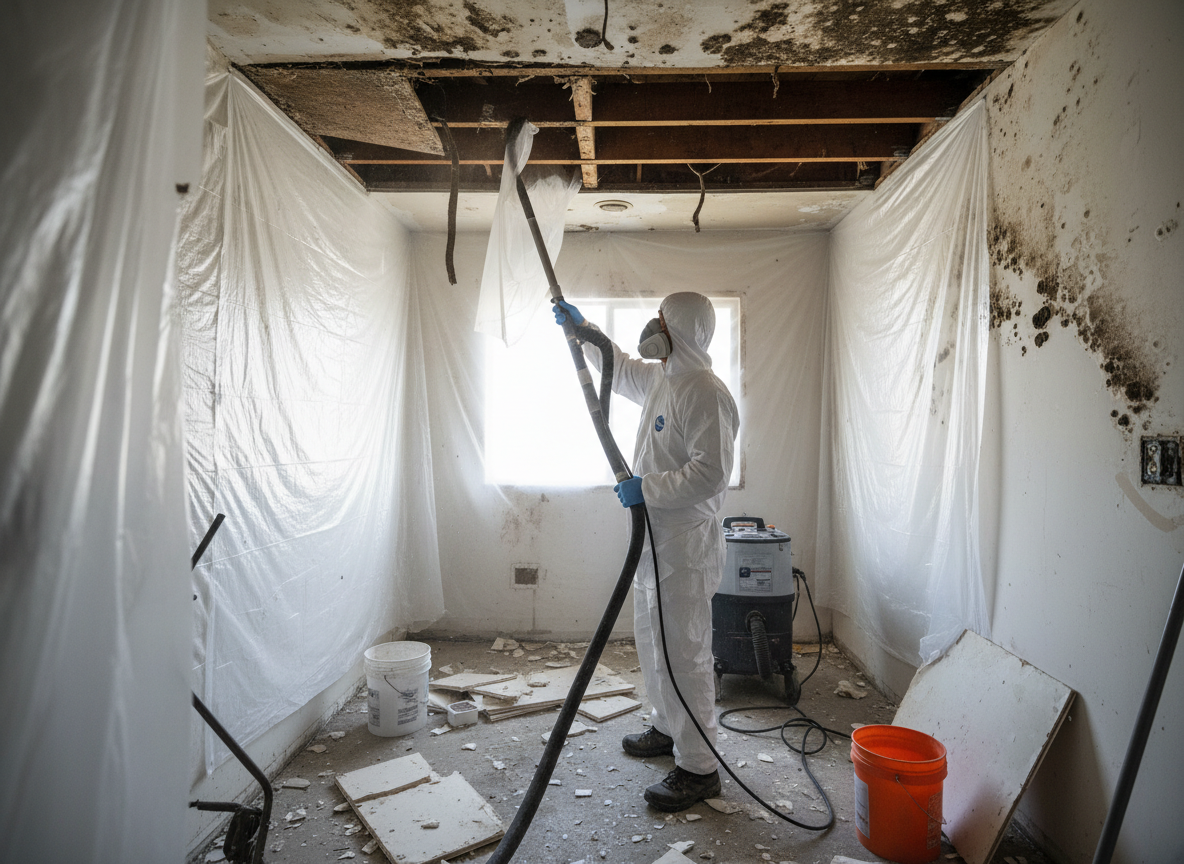
Bolton Hall Museum area neighborhoods contain hillside homes where roof leaks from seasonal winds often go undetected until black spots appear on ceilings. Cleanup protocols include negative air machines to protect adjacent rooms and disposal of contaminated materials at approved Los Angeles County facilities. This approach addresses both visible growth and the hidden colonies that form in insulation after repeated moisture cycles.
Technician insight
In Tujunga, the thing that catches most people out with mold cleanup near me is the way Foothill Trails slopes push winter rain under older slab foundations along the Tujunga Wash corridor. Homeowners often treat only the visible spot in the bathroom while missing how the dry summer heat then pulls that residual moisture upward into walls, letting colonies spread behind plaster before the next rain arrives.
Hidden Crawlspace Growth After Winter Rain
A Foothill Trails homeowner noticed a musty smell in the hallway after a January storm. Inspection revealed water had entered the crawlspace from the sloped lot and wicked into floor joists. Crews removed saturated insulation, treated the framing, and installed ventilation to match the area's dry summer cycle, restoring safe conditions without recurrence.
How it works
- 1
Initial Assessment
Technician arrives within hours, inspects affected rooms plus adjacent spaces in Tujunga Village or Foothill Trails homes, and identifies moisture sources tied to local terrain or climate patterns.
- 2
Containment Setup
Plastic barriers and negative air machines isolate the work zone to keep spores from migrating into unaffected areas of older Sunland or Sylmar properties.
- 3
Removal and Cleaning
Damaged materials are cut out, surfaces are treated, and cavities are dried using equipment suited to the dry summer air or post-rain winter conditions common here.
- 4
Final Verification
Moisture readings confirm dryness and clearance testing ensures the space meets habitability standards before barriers come down.
Pricing
Upfront quotes after inspection, adjusted for home age, extent of hidden damage, and access challenges common in hillside Tujunga properties.