Tujunga sits in the foothills of the Angeles National Forest where Mediterranean summers leave soil and siding bone-dry before winter rains hit. Many homes in Tujunga Village and Foothill Trails date to the 1940s through 1960s with original stucco over wood framing and shallow crawl spaces that trap runoff from the slopes above Tujunga Wash. When moisture enters through cracked foundations or poorly sealed windows, mold colonies establish quickly behind cabinets and in attic insulation before homeowners notice musty odors.
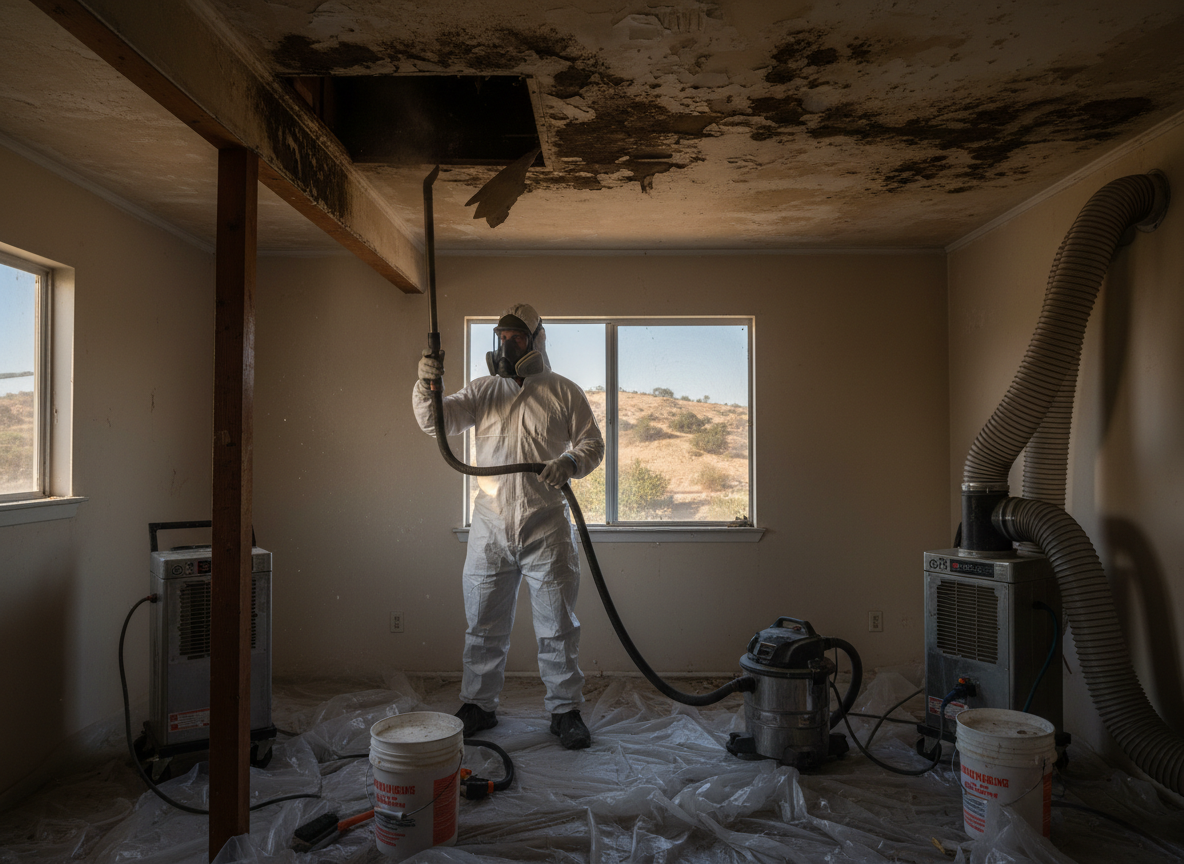
Remediation crews working these properties must account for tight lot lines and shared driveways common in Sunland and Shadow Hills. Negative-air machines and containment barriers are set up to prevent spores from drifting into neighboring yards or HVAC systems that often serve both living space and attached garages. Removal frequently involves cutting out sections of plaster or drywall on sloped ceilings where water follows rafters from roof valleys that collect pine needles from the nearby forest.
Los Angeles County building codes require proper disposal of contaminated materials and documentation of moisture source correction before any rebuild. Technicians test wall cavities with moisture meters after the dry-out phase because residual dampness in older lath-and-plaster walls can restart growth within days. Work in these neighborhoods often occurs at odd hours because residents commute long distances and prefer evening or overnight containment setup to limit daily disruption.
Technician insight
In Tujunga the thing that catches most people out with mold remediation company is how fast water from the first winter storm travels along the slope and pools against the uphill side of the foundation. Homes built before 1960 in Foothill Trails often have no French drain, so a small roof leak turns into wall cavity growth that reaches the floor joists before anyone smells it.
Crawl Space Growth After Roof Leak
A Tujunga Village homeowner noticed a musty smell in the hallway after December rains. Inspection found water entering through a cracked valley flashing on a 1952 home and traveling into the crawl space along the slope. Crews contained the space, removed saturated insulation, treated joists, and installed temporary dehumidification until the roof was repaired and moisture readings dropped below 12 percent.
How it works
- 1
Initial Assessment
Technician inspects affected rooms, crawl spaces and attics using moisture meters and thermal imaging to map hidden growth along Tujunga hillside homes.
- 2
Containment Setup
Plastic barriers and negative-air machines isolate the work zone so spores do not migrate into living areas or neighboring properties in Foothill Trails.
- 3
Removal And Cleaning
Porous materials are removed, non-porous surfaces are treated with EPA-registered antimicrobials, and HVAC components are cleaned when growth has entered ducts.
- 4
Drying And Verification
Dehumidifiers and air movers dry the structure, followed by post-remediation testing to confirm moisture and spore levels meet clearance criteria.
Pricing
Upfront quotes after inspection; price driven by square footage, depth of hidden growth in older framing, and access challenges on sloped lots.