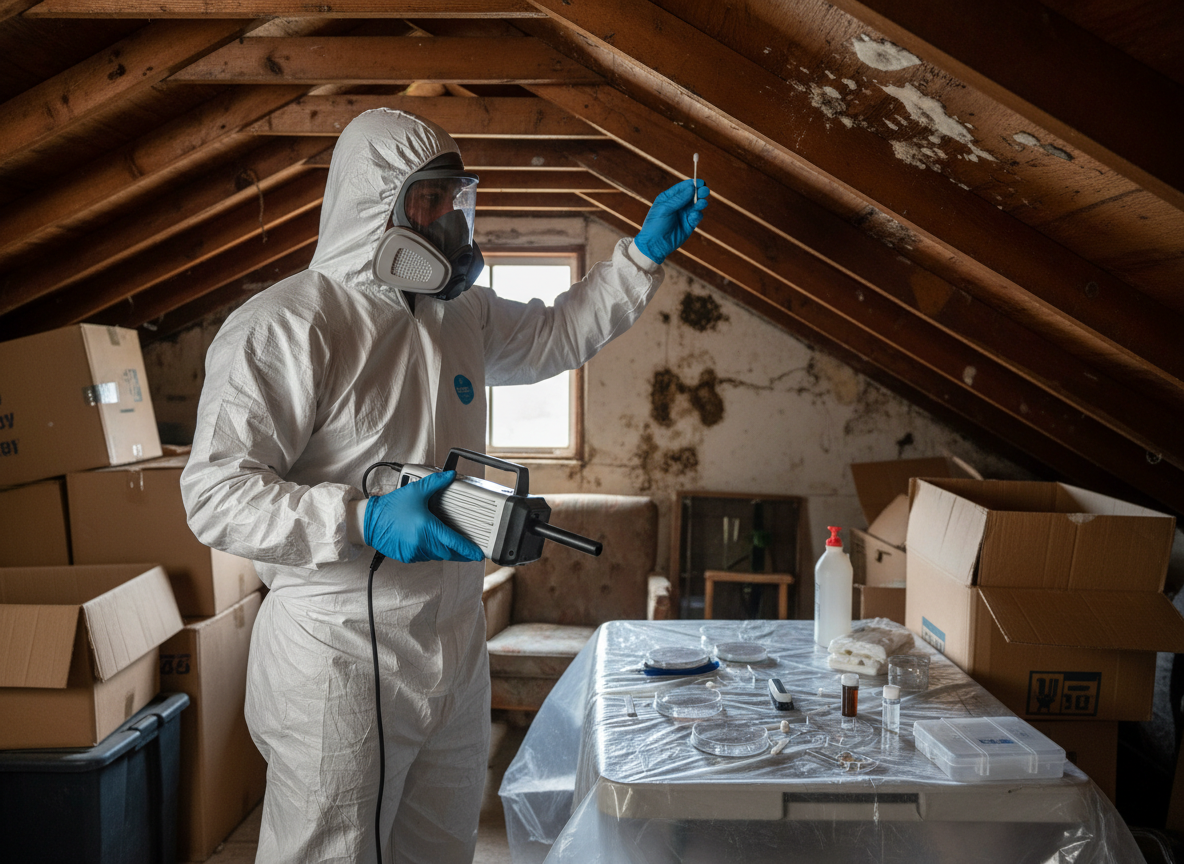
Tujunga homes built before the 1960s in Tujunga Village and along Foothill Trails often feature original plaster, unsealed crawlspaces, and single-pane windows that trap moisture during the mild winter rains. When temperatures rise again in the dry Mediterranean summers, spores from hidden growth in attics or behind bathroom walls become airborne and circulate through the whole house. Spore testing here requires both outdoor baseline samples near the Angeles National Forest and multiple indoor air samples to account for the constant dust and pollen that blows in from the surrounding hills.
Surface tape lifts and bulk material samples from drywall or insulation are essential in Sylmar and Shadow Hills properties where Tujunga Wash flooding has historically reached foundations. We run these tests at different times of day because afternoon winds can skew counts. Results come back with genus-level identification so homeowners know whether the issue is common Cladosporium from the nearby forest or something requiring more targeted containment before remediation begins.
Los Angeles County building codes do not mandate spore testing before repairs, yet skipping it in Sunland homes with flat roofs often leads to repeated callbacks when the true source sits in the insulation above the Bolton Hall Museum area. Testing also documents conditions for insurance claims on properties near the wash where seasonal water intrusion is common. We always explain that a single test reflects conditions at that moment and recommend follow-up sampling after any moisture event.
Technician insight
In Tujunga, the thing that catches most people out with mold spore testing is assuming one sample from the living room tells the whole story. Older homes near Tujunga Wash and the Angeles National Forest have multiple microclimates between the dry summer attic and the cooler crawlspace that only shows up after winter rains. Skipping the outdoor baseline because of nearby forest pollen leads to false positives every time.
Hidden Spores in Foothill Trails Attic
A homeowner in Foothill Trails noticed a musty smell after winter rains but no visible mold. We collected air samples from the living room, master bedroom, and attic plus an outdoor control near the Angeles National Forest. Lab results showed elevated Penicillium in the attic only. Containment and source removal resolved the issue before it spread through the HVAC system.
How it works
- 1
Initial Assessment
Walk through the Tujunga property noting visible water stains, musty odors, and HVAC layout while checking crawlspaces common in Foothill Trails homes.
- 2
Sample Collection
Take outdoor control samples plus multiple indoor air, surface, and bulk samples from affected rooms, focusing on older plaster walls and attic insulation.
- 3
Laboratory Analysis
Send samples to an accredited lab for spore count and genus identification, comparing indoor versus outdoor levels typical for the Angeles National Forest region.
- 4
Report and Recommendations
Deliver a written report with photos, spore data, and clear next steps for remediation if elevated levels are found in Sunland or Sylmar homes.
Pricing
Cost depends on number of samples, property size, and whether crawlspace or attic access is required.