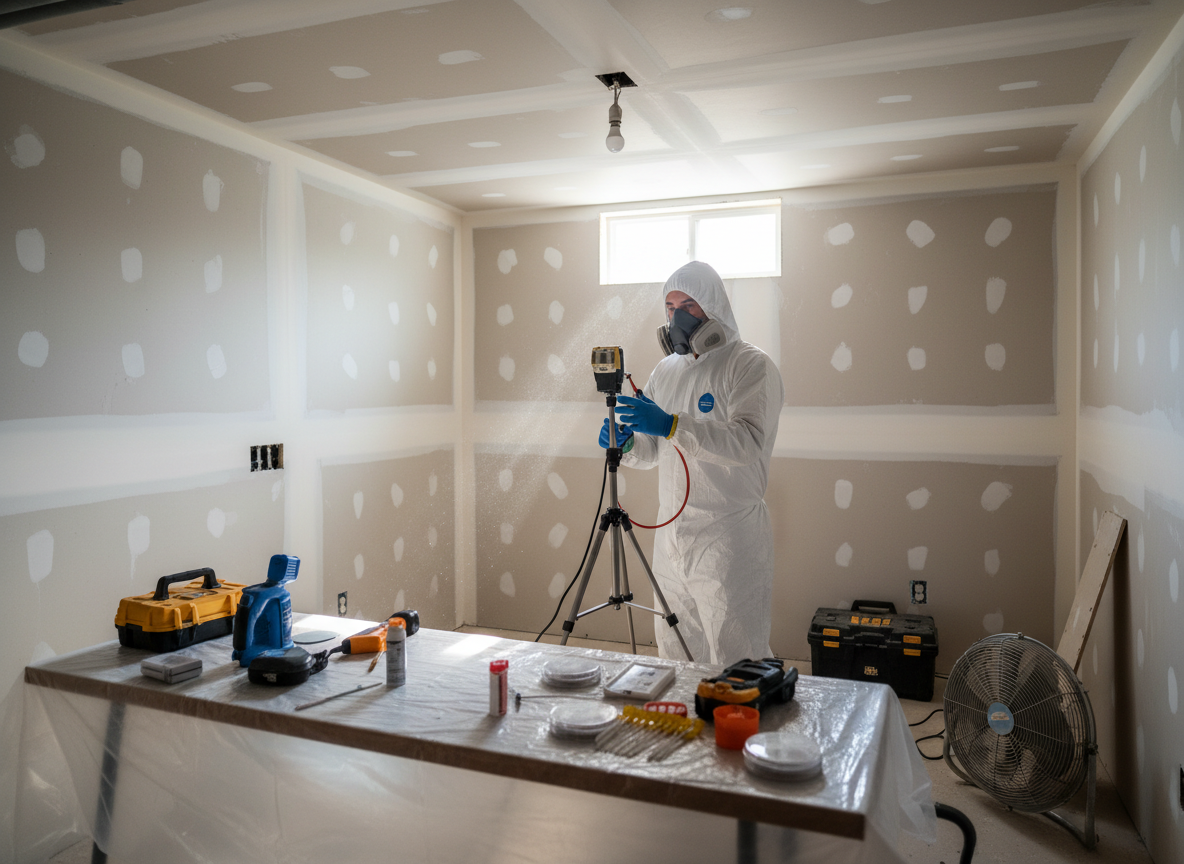
Post remediation mold testing in Tujunga requires careful sampling after visible mold and affected materials have been removed. Technicians collect air samples from multiple rooms plus outdoor controls, along with surface swabs or tape lifts on previously affected walls, ceilings, and subfloors. In Los Angeles County homes built before 1970 common in Tujunga Village and Foothill Trails, older plaster and lath construction can hide residual spores behind layers that simple visual checks miss.
The Mediterranean climate with hot dry summers and mild winters affects testing results here. During summer months low humidity can mask ongoing moisture issues near the Tujunga Wash or in crawl spaces, while winter rains increase the chance of re-wetting. Samples are sent to accredited labs for spore count comparison against outdoor baselines, with reports noting any species that indicate incomplete remediation.
Edge cases arise in hillside properties near Angeles National Forest where drainage patterns differ from flat lots in Sunland or Shadow Hills. Retaining walls and shared foundations with neighboring homes can allow cross-contamination if only one unit was treated. Testing protocols account for these variables by including HVAC sampling when ducts run through treated areas.
Homeowners receive a written report with lab data, photos, and recommendations for any follow-up actions. This documentation helps when dealing with insurance or future property sales in the area.
Technician insight
In Tujunga the thing that catches most people out with post remediation mold testing is older homes along the Tujunga Wash where seasonal moisture from winter rains can reappear behind plaster walls even after summer remediation, so we always pull extra samples from lower levels in Foothill Trails properties.
Hidden Spores Behind Original Plaster in Tujunga Village
A homeowner in Tujunga Village called after remediation for bathroom mold. We collected air and surface samples from the adjacent bedroom and found elevated Penicillium levels behind the original lath and plaster. Additional targeted removal was performed, followed by clearance testing that confirmed levels matched the outdoor baseline from nearby Angeles National Forest.
How it works
- 1
Initial Walkthrough And Sampling Plan
Technician inspects the treated areas, reviews prior remediation scope, and marks locations for air and surface samples based on the layout of Tujunga homes.
- 2
Air And Surface Sample Collection
Multiple indoor air samples plus an outdoor control are taken, along with targeted surface samples on previously affected materials in neighborhoods like Foothill Trails.
- 3
Laboratory Analysis
Samples are processed at an accredited lab to identify spore types and concentrations, comparing indoor results to the outdoor baseline typical for Los Angeles County.
- 4
Report Delivery And Recommendations
A detailed report is provided with findings, photos, and any suggested next steps for properties in Sunland, Sylmar, or Shadow Hills.
Pricing
Pricing varies by number of samples required and property size; contact for an upfront quote based on the specific post-remediation scope.