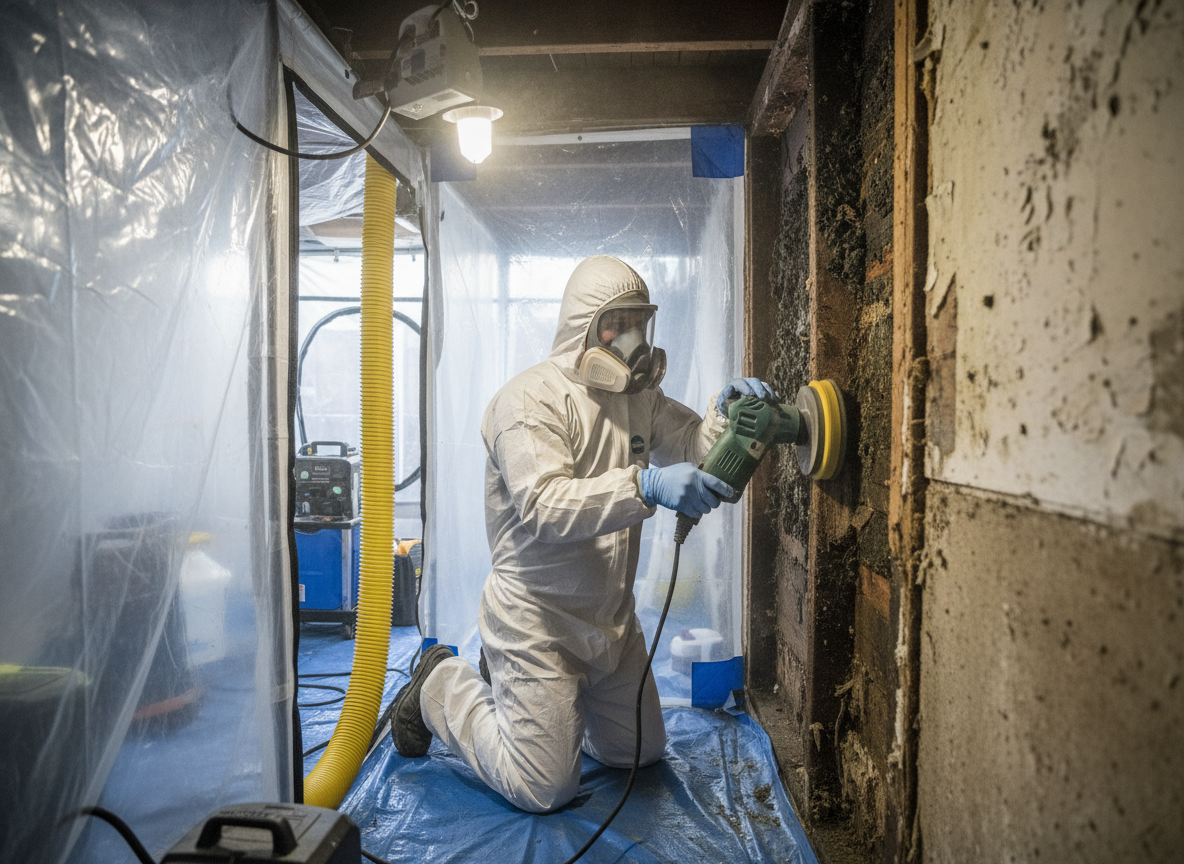
Tujunga sits in Los Angeles County with a Mediterranean climate of hot dry summers and mild winters that often hides moisture problems until they surface in crawl spaces or behind stucco. Many homes in Tujunga Village and Foothill Trails date to the mid-20th century with original plaster and lath or early drywall that traps water from roof leaks or poor drainage off the Angeles National Forest slopes. When winter rains hit the Tujunga Wash watershed, water migrates under slabs or into wall cavities near Bolton Hall Museum properties, creating conditions for toxic mold growth that standard visual checks miss.
Removal work here requires isolating HVAC systems common in these ranch-style houses because spores travel easily through shared ducts to Sunland and Shadow Hills neighbors. Technicians cut out affected gypsum board, treat subflooring with antimicrobial agents rated for porous materials, and use negative air machines sized for the tight floor plans typical along Foothill Blvd corridors. Edge cases include mold on insulation in attic spaces where dry summers have cracked roof flashing, allowing condensation to form during the first cool nights of fall.
Los Angeles County building codes require proper disposal of contaminated materials and documentation of moisture sources before any reconstruction. Homeowners in Sylmar-adjacent areas often discover mold after failed attempts to paint over stains, which only drives spores deeper into wood framing. Work stops if asbestos is found in older joint compound, a frequent occurrence in Tujunga stock built before 1980, requiring licensed abatement coordination before continuing.
Technician insight
In Tujunga, the thing that catches most people out with toxic mold removal is how the dry summers let small leaks from Tujunga Wash runoff go unnoticed until mold reaches the subfloor in older Foothill Trails homes with raised foundations.
Hidden Growth After Roof Leak in Tujunga Village
A homeowner noticed a musty smell in the hallway after heavy winter rain. Inspection revealed water had entered through cracked flashing and wicked into the plaster walls. We contained the hallway, removed the affected sections, treated the framing, and dried the cavity over three days before clearance testing passed.
How it works
- 1
Initial Assessment
Technician inspects affected rooms, measures moisture levels in walls and floors, and identifies hidden growth using moisture meters and borescopes.
- 2
Containment Setup
Plastic barriers and negative air pressure isolate the work zone to prevent spores from spreading to unaffected areas of the home.
- 3
Material Removal
Cut out and bag contaminated drywall, insulation, and trim for proper disposal while treating remaining surfaces with EPA-registered antimicrobials.
- 4
Drying and Verification
Industrial dehumidifiers and air movers dry the structure, followed by post-remediation air sampling to confirm clearance.
Pricing
Upfront quotes after inspection; price depends on square footage affected and whether structural wood requires treatment.