Tujunga sits in Los Angeles County with a Mediterranean climate of hot dry summers and mild winters. Winter rains often push water through cracked stucco and into crawl spaces of 1950s-1970s homes common along Foothill Trails and Tujunga Village. Hidden mold grows behind baseboards and in attics when moisture from the Tujunga Wash or hillside runoff is not addressed quickly.
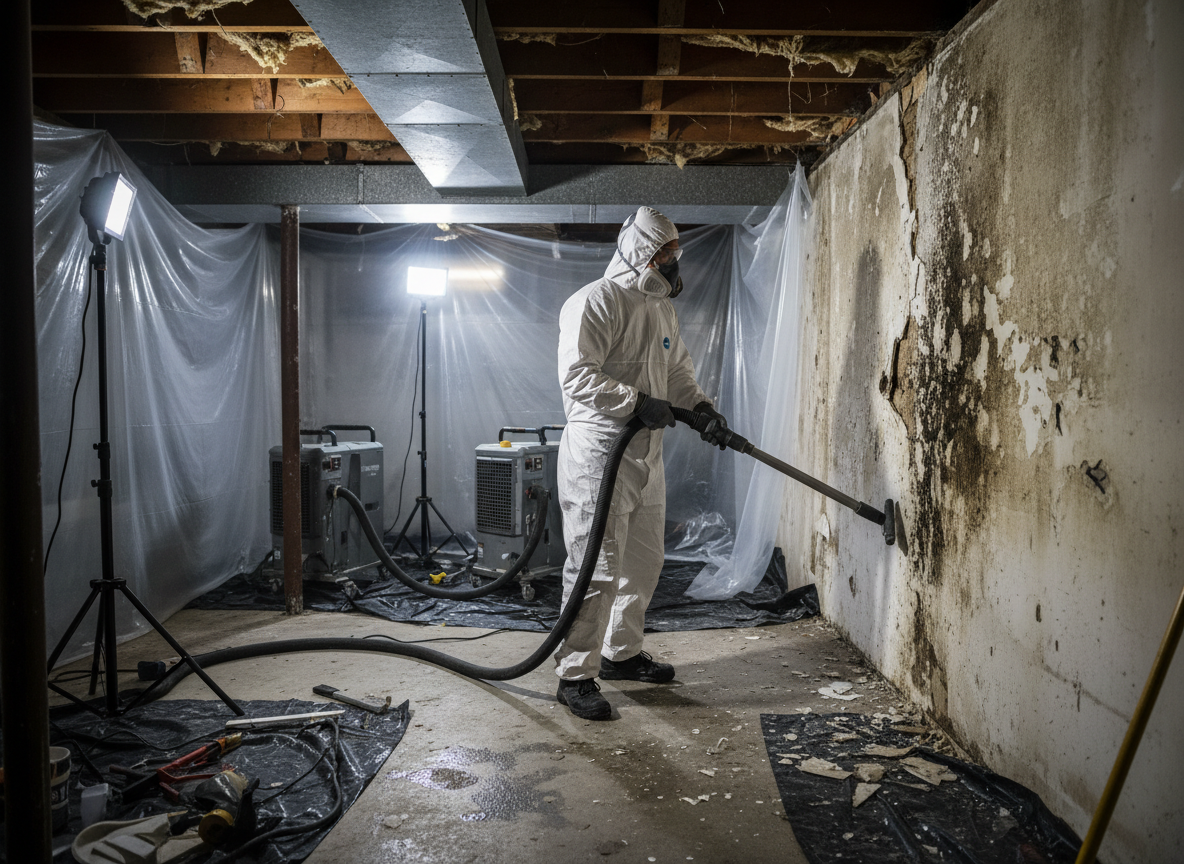
Drywall and plaster in these older homes absorb water fast and release spores into HVAC systems once temperatures rise again. Technicians must map moisture with meters, cut out affected sections without disturbing settled dust, and run negative air machines to keep particles out of living spaces. Homes near Angeles National Forest also see occasional wind-driven rain that soaks window frames and exterior sheathing.
Los Angeles County building codes require proper disposal of contaminated materials and documentation of clearance testing before walls are closed. Skipping this step leaves homeowners dealing with recurring growth after the next storm. Work along narrow streets in Shadow Hills and Sylmar often requires smaller equipment and careful containment to avoid tracking spores into unaffected rooms.
Technician insight
In Tujunga, the thing that catches most people out with water damage mold remediation is how winter rain seeps into the older stucco homes along Foothill Trails and sits behind the plaster for months. The hot dry summers then pull that moisture upward into attics where it feeds growth that homeowners never see until the next rain event.
Hidden Growth After Winter Runoff
A Sunland homeowner noticed musty odors after heavy rain near the Tujunga Wash. Inspection found water had wicked up into the crawl space of a 1960s home and spread mold along floor joists. Crews contained the area, removed saturated insulation and baseboards, dried the structure and cleared the space with surface testing before the homeowner could begin repairs.
How it works
- 1
Initial Assessment
Inspect all affected rooms, attics and crawl spaces for moisture sources tied to local drainage patterns.
- 2
Containment Setup
Isolate work zones with plastic barriers and negative air to prevent spore spread through shared walls typical in Tujunga Village.
- 3
Material Removal
Cut and bag water-damaged drywall, insulation and baseboards while protecting intact surfaces.
- 4
Drying and Treatment
Apply antimicrobial solutions and run industrial drying equipment until readings meet clearance standards.
- 5
Final Clearance
Test air and surfaces, then document results for homeowner records before rebuilding begins.
Pricing
Pricing depends on square footage affected, access difficulty in hillside homes, and whether HVAC cleaning is required.